

How much do you know about the person or broker-dealer you’re working with?
You may have been referred to a registered representative or broker-dealer by a Qualified Intermediary, attorney, accountant, or real estate professional. A referral can be a useful starting point, but it’s not a substitute for your own due diligence.
Take the time to independently verify the person’s background before investing.
Start With BrokerCheck
BrokerCheck is a free service provided by the Financial Industry Regulatory Authority (FINRA) that lets investors view regulatory violations, disciplinary actions, customer complaints on a broker’s record, as well as their employment history, licensing and registration status, and industry exams.
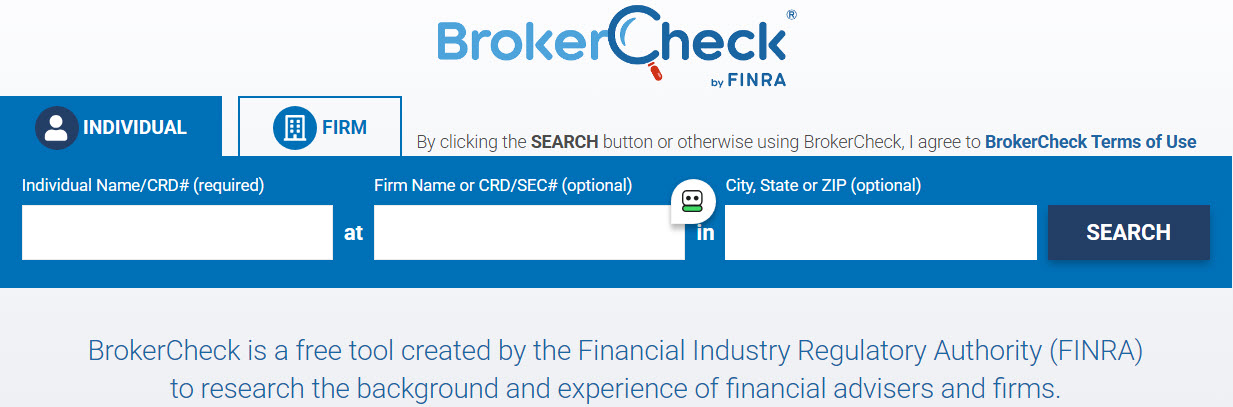
Access BrokerCheck here. Enter the representative’s name or CRD number and select the correct person from the results. You can do the same for a broker-dealer by clicking on the “Firm” tab and searching its name or CRD number. A CRD number is a unique identification number used in FINRA’s registration system. It can help make sure you are looking at the correct person or firm, particularly when two people have similar names.
Why Does This Matter?
The SEC recommends checking an investment professional’s background before you invest. The SEC notes that an investment professional’s qualifications, disciplinary history, and employment history can provide information that may be signs of potential problems.
That’s worth a few minutes of your time, particularly when you are considering an investment that may involve a substantial amount of your hard-earned money.
How Long Have They Been in the Business?
Look at both the representative’s registration history and employment history:
- How long have they been in the securities business?
- How many firms have they worked for?
BrokerCheck provides an individual’s full registration history — the firms where the person has been registered and the dates of each registration. It separately provides employment history for the past 10 years. These are two different things: someone’s registration history can extend well beyond that 10-year window shown for employment.
A person may have decades of experience in the securities business but have worked at only a few firms in the past 10 years. Conversely, someone else may have moved between numerous firms in a relatively short period.
If a representative has moved between several brokerage firms, ask why. There may be a perfectly reasonable explanation — a merger, acquisition, or change in business model. But if there are disclosures associated with any of the previous firms, take a closer look.
Also look at the representative’s current licenses and registrations. Don’t assume that someone who has worked in the securities industry is currently registered to conduct the business they’re offering — BrokerCheck specifically shows whether a person is currently registered.
BrokerCheck does not provide a complete picture of a financial professional’s background. If education or professional experience is important to you, ask where the person went to college, whether they graduated, what degree they earned, and what other professional experience they have.
You should also review the person’s outside business activities listed on BrokerCheck. If they have other businesses or professional activities, ask whether any of them could create a conflict with the investment they are recommending.

Look at the Broker-Dealer, Too
Don’t stop with the individual.
Research the broker-dealer they work for. Look at the firm’s history, registrations, disclosures, and how long it has been in business.
Then look at who owns or controls the broker-dealer.
BrokerCheck firm reports show a firm’s regulatory and disciplinary history, as well as basic background information like past mergers or name changes.
Your relationship isn’t just with an individual broker — it’s with the broker-dealer that employs them and the people who own and control that firm.
If the owners or executives have a securities-industry background, research them as well.
A Referral Is Not a Background Check
A qualified intermediary, attorney, accountant, or real estate professional may introduce you to a financial professional offering DST replacement-property options. A referral, however, doesn’t mean that person’s FINRA background has been fully reviewed.
Investor.gov advises investors to check an investment professional’s background even when the introduction comes from someone they know or trust.
Read the Disclosures
If you find a customer complaint, arbitration, or other disclosure, read the details.
Don’t simply count the number of disclosures. Look at what was alleged, when it happened, how long ago it occurred, how much was claimed, whether it’s an isolated incident or part of a pattern, and how it was resolved.
Then ask the most important question:
Who paid?
A settlement can resolve a dispute without the matter ever going to an arbitration hearing. Look at the amount claimed, the amount of the settlement, and whether the registered representative, the broker-dealer, or both contributed to the settlement.
For example, a $500,000 claim that was settled for $20,000 tells you something different from a $500,000 claim that resulted in a $400,000 payment. And if the broker-dealer paid the entire settlement while the registered representative paid nothing, that is also relevant information.
A settlement by itself does not establish that the allegations were true. Read the allegations, the response, the amount claimed, the amount paid, and who made the payment before drawing your own conclusions.
Look for Tax Liens and Other Financial Issues
BrokerCheck can contain certain financial disclosures, including judgments and liens, as well as bankruptcy information.
But a current report should not automatically be interpreted as a complete history of every financial problem a person may have experienced.
Ask directly:
Have you ever had a federal or state tax lien, judgment, or bankruptcy?
You can then ask when it occurred, how much was involved, and how it was resolved.
Customer dispute information can also, in limited circumstances, be expunged from FINRA’s Central Registration Depository (CRD) and no longer appear on BrokerCheck. FINRA has specific standards and procedures governing expungement.
The point is not that investors should assume something has been hidden. It is simply that a clean current BrokerCheck report is one part of your research, not a guarantee that nothing has ever happened.
Ask About DST Sponsors
Have you ever invested a client’s money with a 1031 DST sponsor that experienced serious financial problems or went bankrupt?
The recent bankruptcy of Inspired Healthcare Capital shows why this question matters.

Inspired Healthcare Capital filed for Chapter 11 bankruptcy on February 2, 2026, along with about 160 affiliated entities. The company had raised more than $1.2 billion through private placements, DSTs, and other private investment vehicles since 2016, according to InvestmentNews. The value of those investments is now in question.
For an investor, the question is straightforward:
What did you know about the sponsor, and what due diligence did you perform before recommending its investment?
That is information an investor should be comfortable asking about before committing a substantial amount of money.
Check the Email Address
Is the email address one the broker-dealer has approved for the representative’s business use?
Be especially careful with personal addresses or look-alike domains. Some representatives use a separate business domain approved by their broker-dealer, so confirm an unfamiliar address directly with the firm using independently verified contact information.
The SEC warns that fraudsters may impersonate legitimate investment professionals and firms by using their names, registration information, websites, email accounts, and other information.
If something doesn’t look right, independently verify the person’s contact information through the firm’s official website or BrokerCheck before sending money or personal information.
Take 10 Minutes
Before investing in a 1031 DST, look up the financial professional on BrokerCheck.
Confirm the person’s current registration and licenses.
Look at how long they have been in the securities business and how many firms they have worked for.
Read any complaints, arbitrations, or regulatory disclosures. Look at when they occurred, how they were resolved, how much was claimed, how much was paid, and who paid.
Then research the broker-dealer, including its history, CRD number, owners, and key executives.
Check the email address. Confirm any unfamiliar address directly with the firm using independently verified contact information.
If something doesn’t make sense, ask questions and verify the information before sending money or personal information.
You are investing a lot of your hard-earned money. Take 10 minutes to research the person and the firm before you invest.
Key Takeaways
- Check the financial professional’s BrokerCheck record before investing.
- Review the person’s registration history, employment history, disclosures, and current licenses.
- Research the broker-dealer, including its history, owners, and key executives.
- Don’t rely solely on a referral. Conduct your own due diligence.
- Independently verify the person’s email address with the firm before sending money or personal information.
The Bottom Line
NexTrend Securities believes investors should have access to information that helps them make informed decisions. If you would like help understanding a BrokerCheck report, we are happy to walk through the information with you.
Have questions about DST investments?
NexTrend Securities works with accredited investors, providing DST investment options as replacement property in a 1031 exchange.
Call NexTrend Securities at (972) 661-1283
This article is provided for general educational purposes only and does not constitute tax or investment advice. DST investments involve risk, including illiquidity and potential loss of principal, and are suitable only for accredited investors. Tax treatment depends on individual circumstances. Consult your tax advisor regarding your individual situation. NexTrend Securities is not a tax advisor and does not provide tax advice.